
Book review: CBT-AN-20 — a new brief protocol for anorexia nervosa
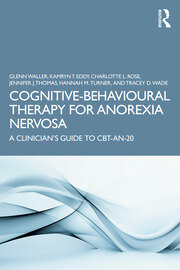
Last year I had the pleasure of being asked to review the new CBT-AN-20 manual, written by Glenn Waller, Kamryn Eddy, Charlotte Rose, Jennifer Thomas, Hannah Turner, and Tracey Wade.
In my own clinical practice and supervision sessions, it has become increasingly clear that many treatment manuals developed in the early 2000s have struggled to keep up with the developments that are happening in our clinics. So it was genuinely refreshing to read a new manual that feels aligned with what we are actually delivering in real-world clinical settings and that addresses the complexities and realities of working with real clients.
One of the most striking aspects of the protocol is that it is designed to be delivered in approximately 20 sessions, with outcomes comparable to longer treatment approaches for anorexia nervosa. If this can be consistently achieved in practice, it represents a significant development for the field.
In my opinion, cognitive behavioural therapy remains one of the most effective and useful interventions for eating disorders and related difficulties. I say this not only because of the evidence base, but because of how interventions are delivered within this framework. The steps are clear, they are supported by psychoeducation, and decision-making is guided by a shared formulation.
There are also clear strategies for working with ambivalence, and the model allows clinicians to use behavioural experiments — sometimes even very small “micro-experiments” — to test the fears and predictions that often keep people stuck in an eating disorder, for which they have sought help.
I often hear myths that CBT is “superficial” or “not suitable for neurodivergent clients”. From my experience, I fundamentally disagree. Eating-disorder-focused CBT is rich, collaborative and deeply client-centred. When delivered well, it can be highly effective with autistic clients, those with trauma histories, and people experiencing a range of co-occurring difficulties.
At times I worry that the broader drift away from evidence-based treatment risks leading us toward poorer outcomes and longer illness courses for our clients.
But I digress.
What is new in CBT-AN-20?
The new CBT-AN-20 protocol introduces a number of important evidence-based developments compared with earlier CBT manuals. What stood out to me most when reading the manual was that I actually felt excited — it genuinely felt like reading something new.
Even after more than 20 years of clinical practice, I found myself learning new strategies and thinking differently about aspects of treatment.
At several points I caught myself thinking about clients I have worked with in the past and wishing that some of these tools had been available earlier.
Several innovations within the protocol are particularly worth highlighting.
More sophisticated case formulation
One important development is the move toward more complex case formulations, including the use of an adapted 5-P formulation that allows clinicians to address longer-standing illness duration and broader maintaining processes.
Earlier CBT-E formulations tended to focus primarily on maintaining factors. Expanding this framework creates a richer shared understanding of the difficulties and opens up more personalised decision-making within treatment.
Working with the anorexic voice
Another standout was working with the anorexic voice
Anyone who works clinically with individuals with anorexia will recognise how challenging it can be when anorexia effectively “enters the room”. Debating with anorexia is futile (and not recommended), and many clients experience the voice as part of themselves rather than something separate so it can be challenging to navigate how to make that deeply understood and heard whilst also holding space for change conversations..
The protocol introduces evidence-based ways of working with this through structured chairwork and parts-based approaches.
Chairwork itself is not new — it has been used for decades across multiple modalities including CBT, schema therapy, psychodynamic approaches and compassion-focused therapy. However, this was the first time I had seen such a clear and clinically grounded application of these methods specifically within eating disorder treatment.
I was so interested in this aspect that I signed up for a three-day online training running from 5pm to 1am Perth time so that I could learn directly from the UK experts developing this work.
Since then it has become an important part of my own clinical practice. Clients often ask to do “that weird chairwork thing again” because they recognise how powerful it can be in helping them relate differently to the anorexic voice, self-criticism and anxiety.
Addressing neurodivergence and trauma
Another very welcome development is the explicit consideration of neurodivergence and trauma, and how these factors can be addressed within the treatment protocol.
These are realities we see frequently in clinical practice, and it was encouraging to see them integrated thoughtfully into the model – for example, in the context of case formulations or psychoeducation materials specifically focussed on understanding temperament, as well as adaptations for working with different traits and temperaments or specific trauma-focussed work.
Single-session interventions
The protocol also introduces the use of single-session interventions that can be incorporated at different stages of treatment to address specific barriers to progress.
This creates opportunities for both greater potency and greater personalisation of treatment.
Psychoeducation throughout the manual is also more comprehensive, with accompanying online resources. There is a stronger focus on emotional triggers, interpersonal environments, and even the role of temperament — something that has arguably been overdue in eating disorder treatment resources.
Reflections from earlier CBT training
When I was first trained in CBT for eating disorders, it was within the framework of enhanced Cognitive Behavioral Therapy by Christopher Fairburn.
This model provided a robust and theoretically driven framework for treatment. However, in practice my team and I would sometimes reach points where the material felt too generic, not personalised enough, or where there was insufficient guidance to navigate common “stuck points” in treatment.
Over time we began integrating broader CBT-ED approaches, including more personalised formulations, greater use of behavioural experiments, and additional work targeting related difficulties such as repetitive negative thinking or trauma.
While this improved treatment potency, challenges still remained — particularly around ambivalence and the anorexic voice.
Reading the CBT-AN-20 manual, it felt like many of these clinical realities had been recognised and addressed.
Respect for the developers
The clinicians and researchers who developed this protocol have contributed enormously to our field over many years.
What stands out to me is that their work is clearly grounded not only in research but also in deep clinical expertise and a genuine commitment to improving outcomes for people living with eating disorders.
I have enormous respect for their contribution.
Who this manual will help
This manual will be valuable for both experienced clinicians and those earlier in their careers who want to develop confidence and effectiveness in treating anorexia nervosa.
It provides practical guidance for navigating common obstacles and stuck points while maintaining a collaborative and supportive stance toward clients.
For clinicians interested in learning more about this approach and how to apply it in practice, I’m very pleased that members of the development team will be coming to Perth later this year to deliver training in CBT-AN-20.
CBT-AN-20 Training in Perth
Morgan Psychology together with Richmind WA are hosting Australia’s first training in the CBT-AN-20 protocol with the developers of this treatment, Professors Tracey Wade (Australia) and Glenn Waller (UK).
This training will focus on practical implementation of the model in real-world clinical practice and is suitable for experienced mental health clinicians and those who new to working with eating disorders. There are limited spaces and registrations are now open.
WHERE: Perth, Richmind WA, Cannington (free parking)
WHEN: 25-26 August 2026